


 Facebook
 Twitter


Description
Throughout the years, the car has always been garaged when not in use.
The car comes with the original brochure, owner's manual, workshop literature, and a binder with papers and literature from Elsa's time as owner, as well as various period documents and photographs. In addition, a book about Auto Union, among other items. As a point of interest, the car is mentioned in a column by Sten Bergkvist in Nostalgia issue 7, 2020. He had come across a photo of the car from 1936 and writes, among other things, about Elsa. He concludes by noting that it had long since been removed from the vehicle registry – which turned out to be incorrect. It is very much alive, now ready to drive, and can bring joy to owner number four on its journey toward its hundredth anniversary in nine years.
 Free history (4)
Technical data
Condition
-
Mechanical condition
The mechanics and functions have been attended to in recent years and work well. Started without issue and ran smoothly and pleasantly in both engine and drivetrain. During a short test drive in a residential area, everything, including steering, clutch, gearbox, and brakes, was found to work well.
Not inspected on a lift, but what could be seen looked good. -
Interior condition
The interior is in wonderfully patinated original condition. The seats have reportedly been re-padded, although it is unclear when. Seating comfort is comfortable and firm. Door panels and trim are in good usable condition. The steering wheel, controls, dashboard, and gauges are functional, but the fuel gauge needs attention. The windshield's ventilation functions work well. Good rubber mats. Small trunk space but in good condition. There is also room for some luggage behind the seats.
-
Exterior condition
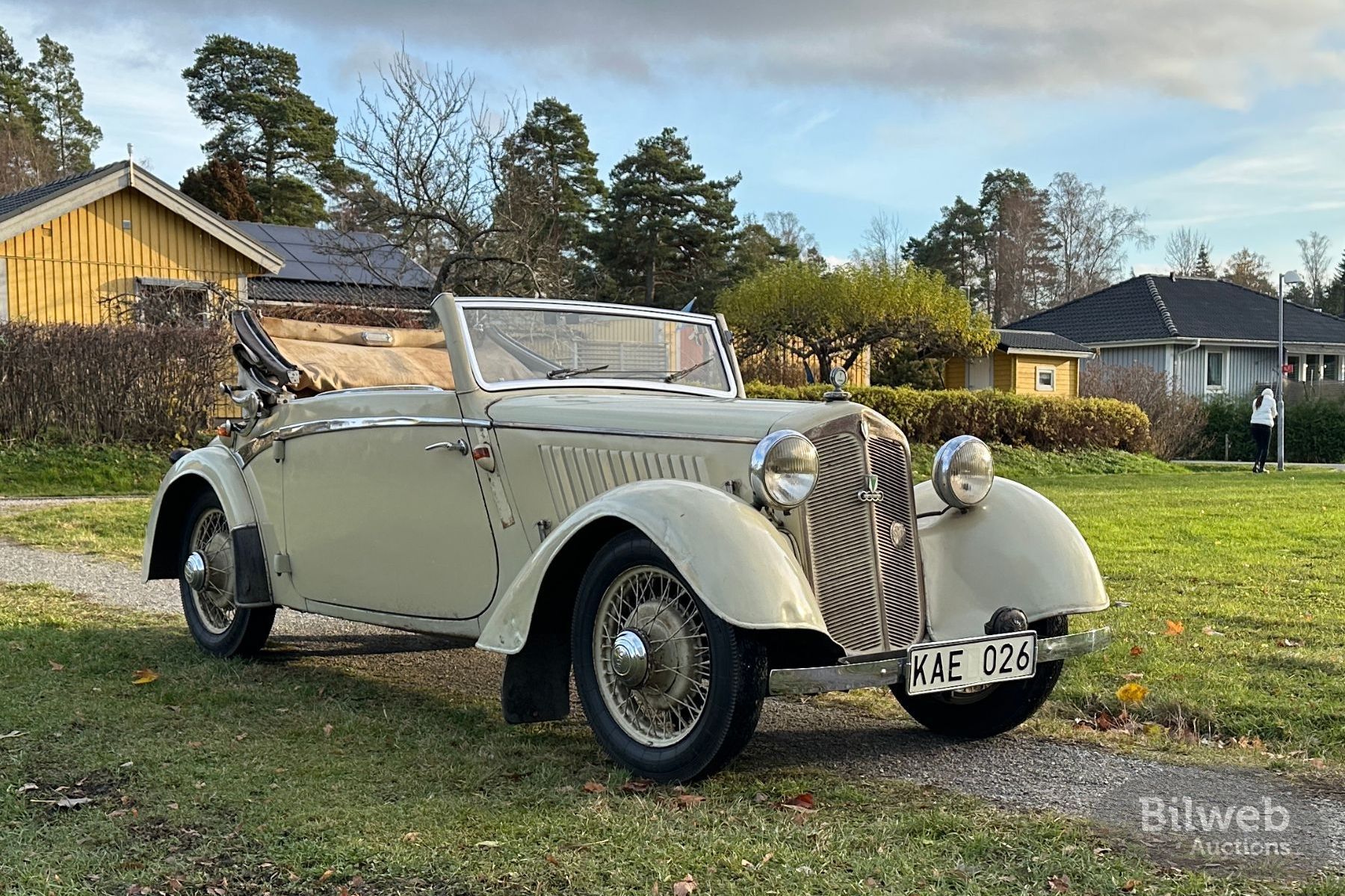
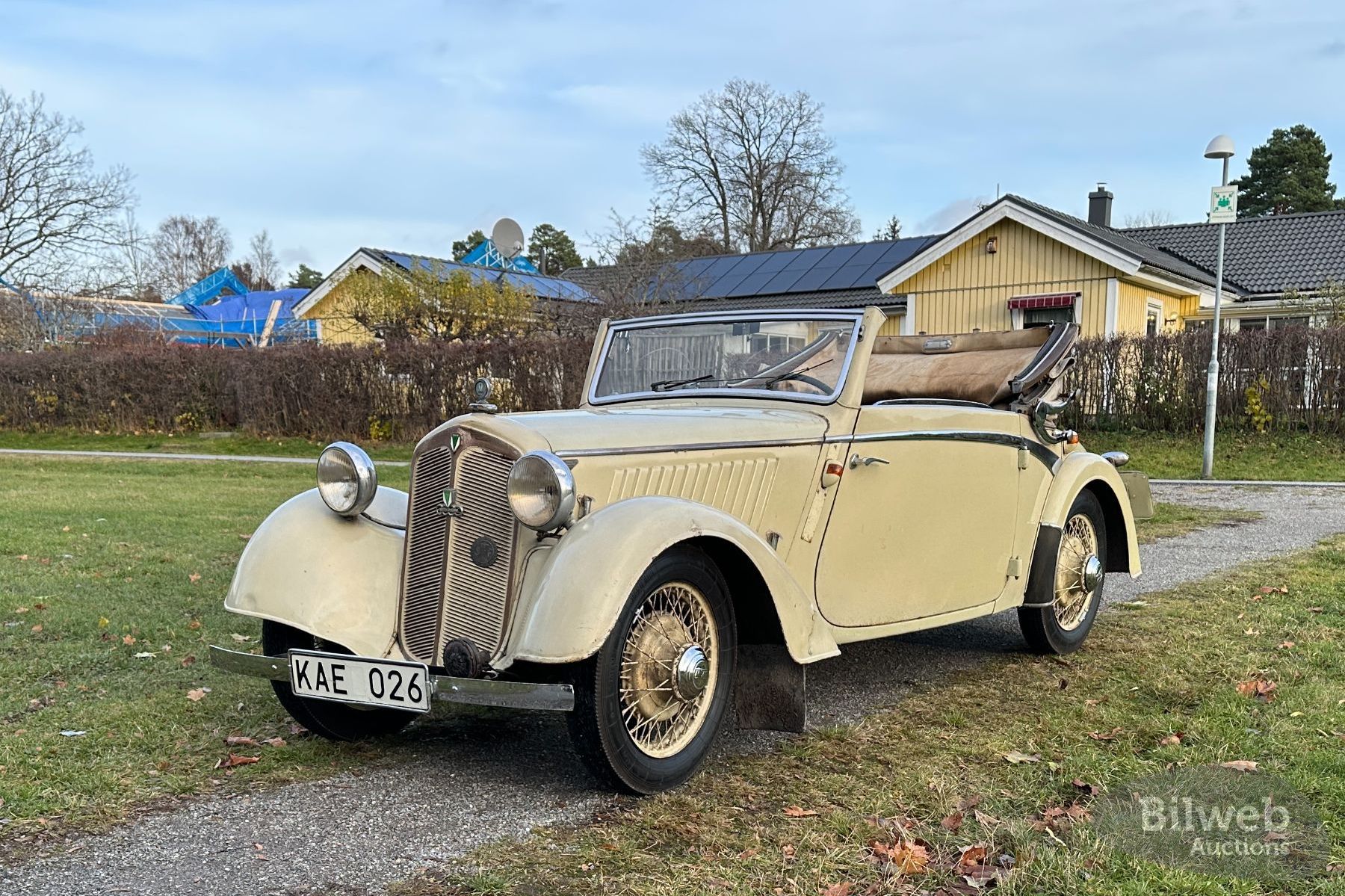
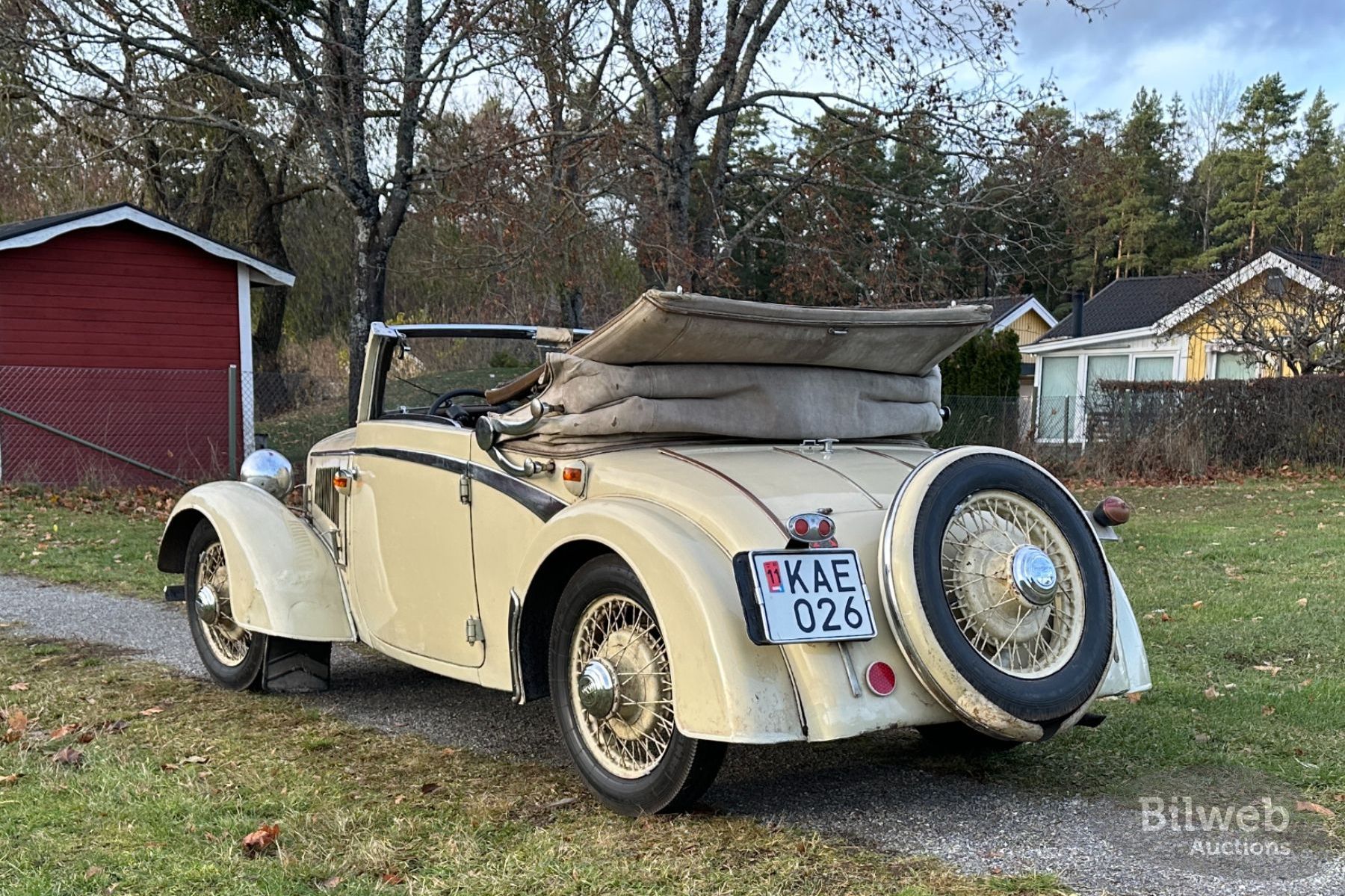
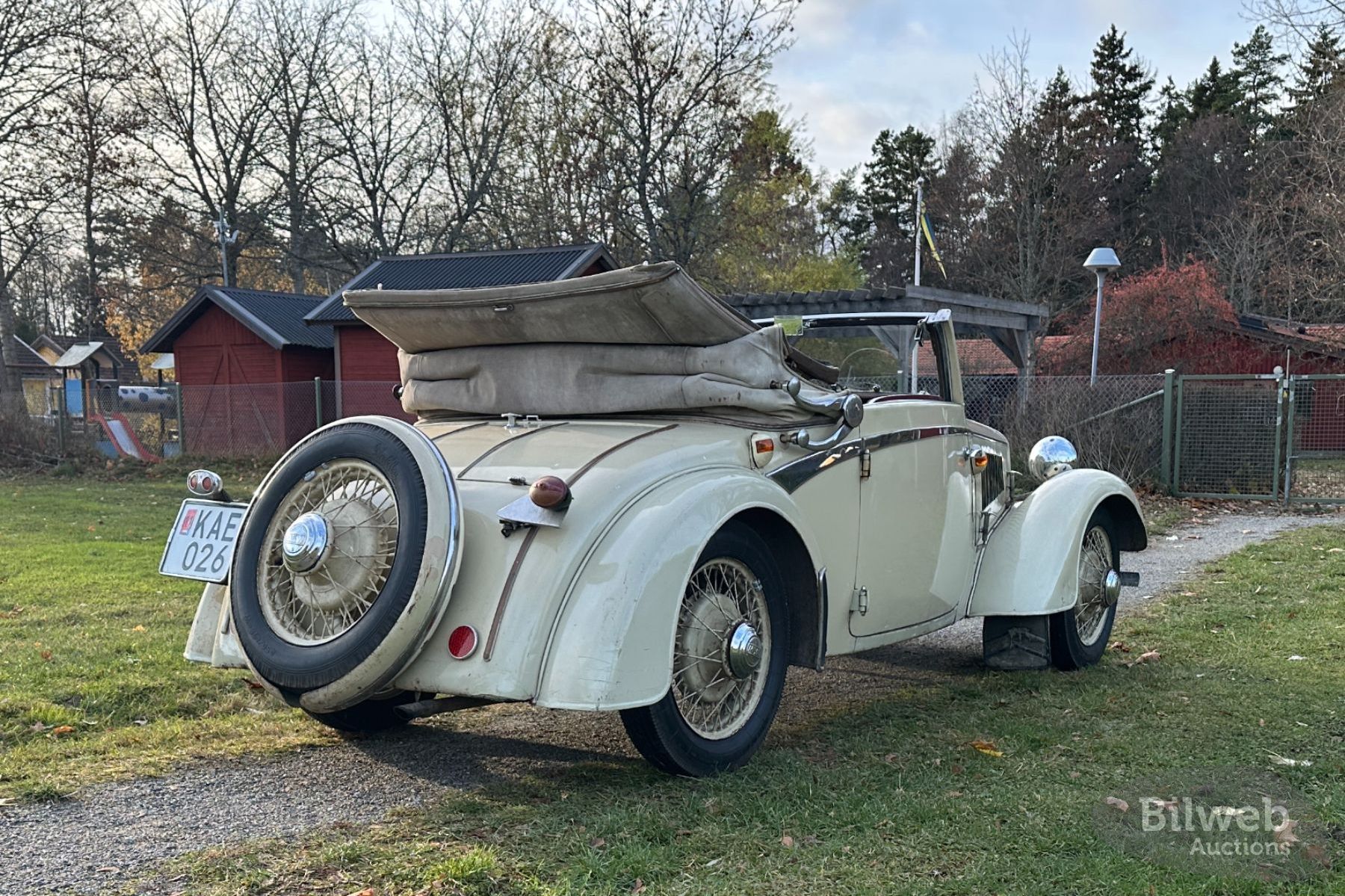
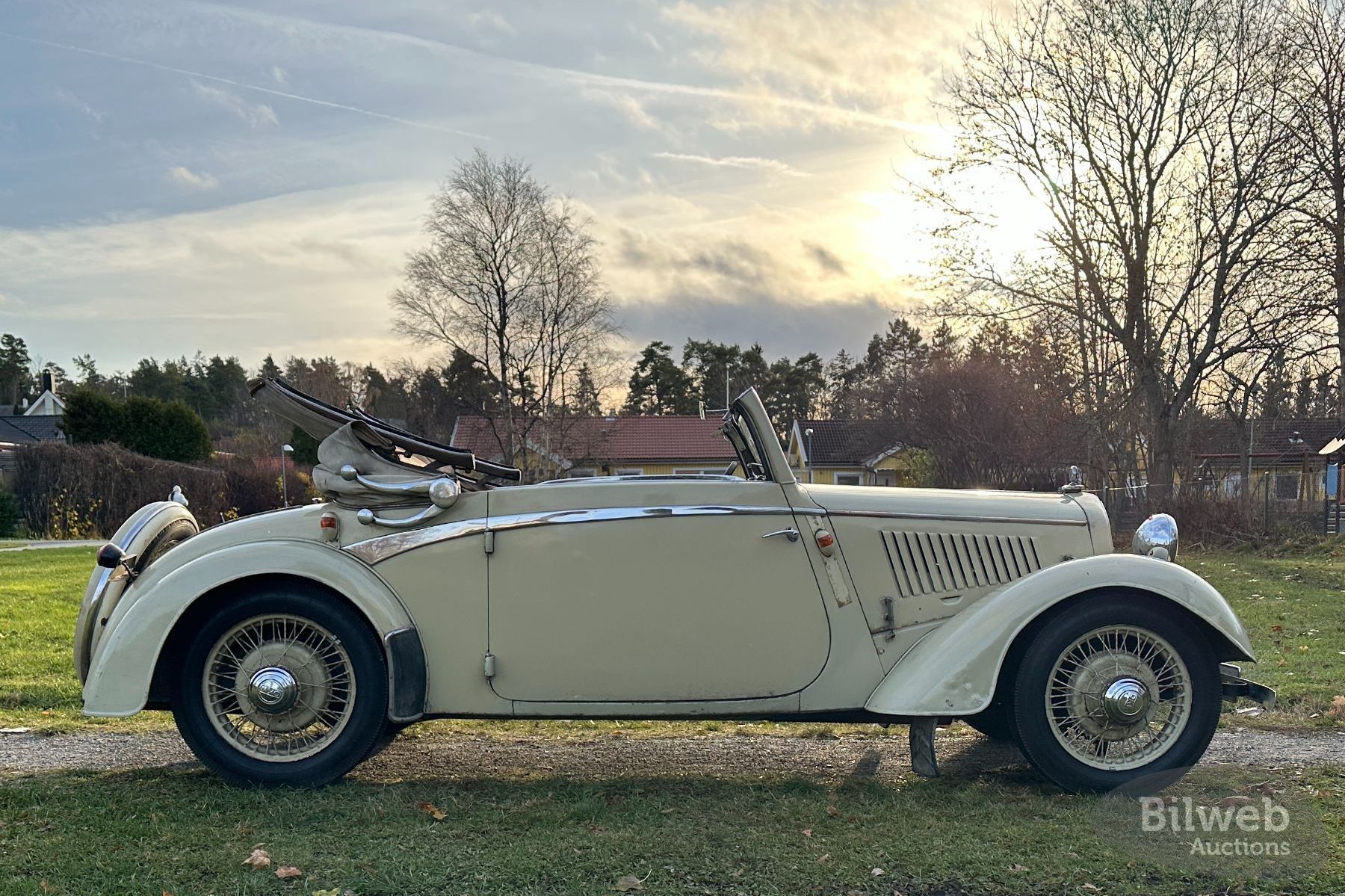
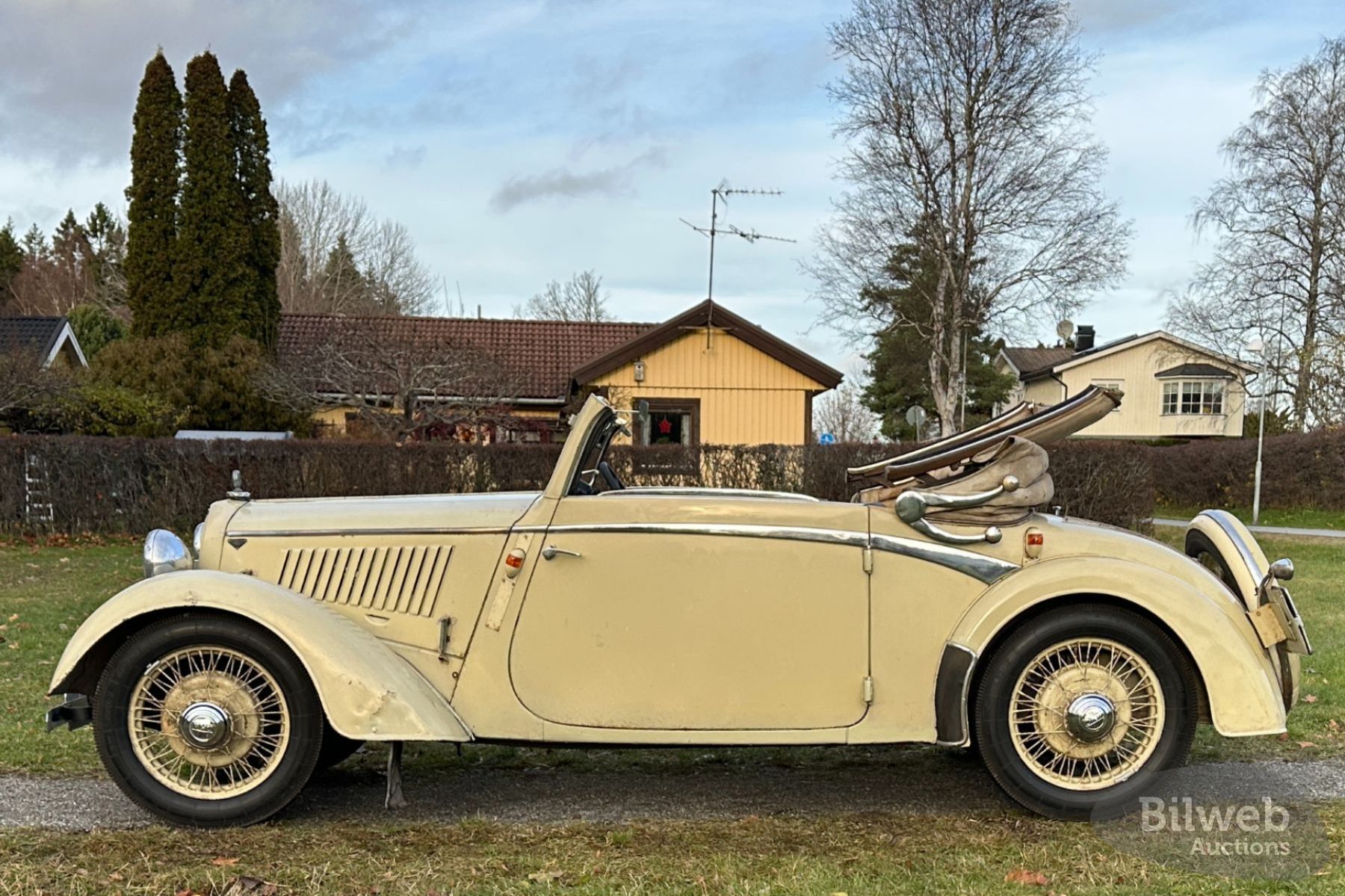
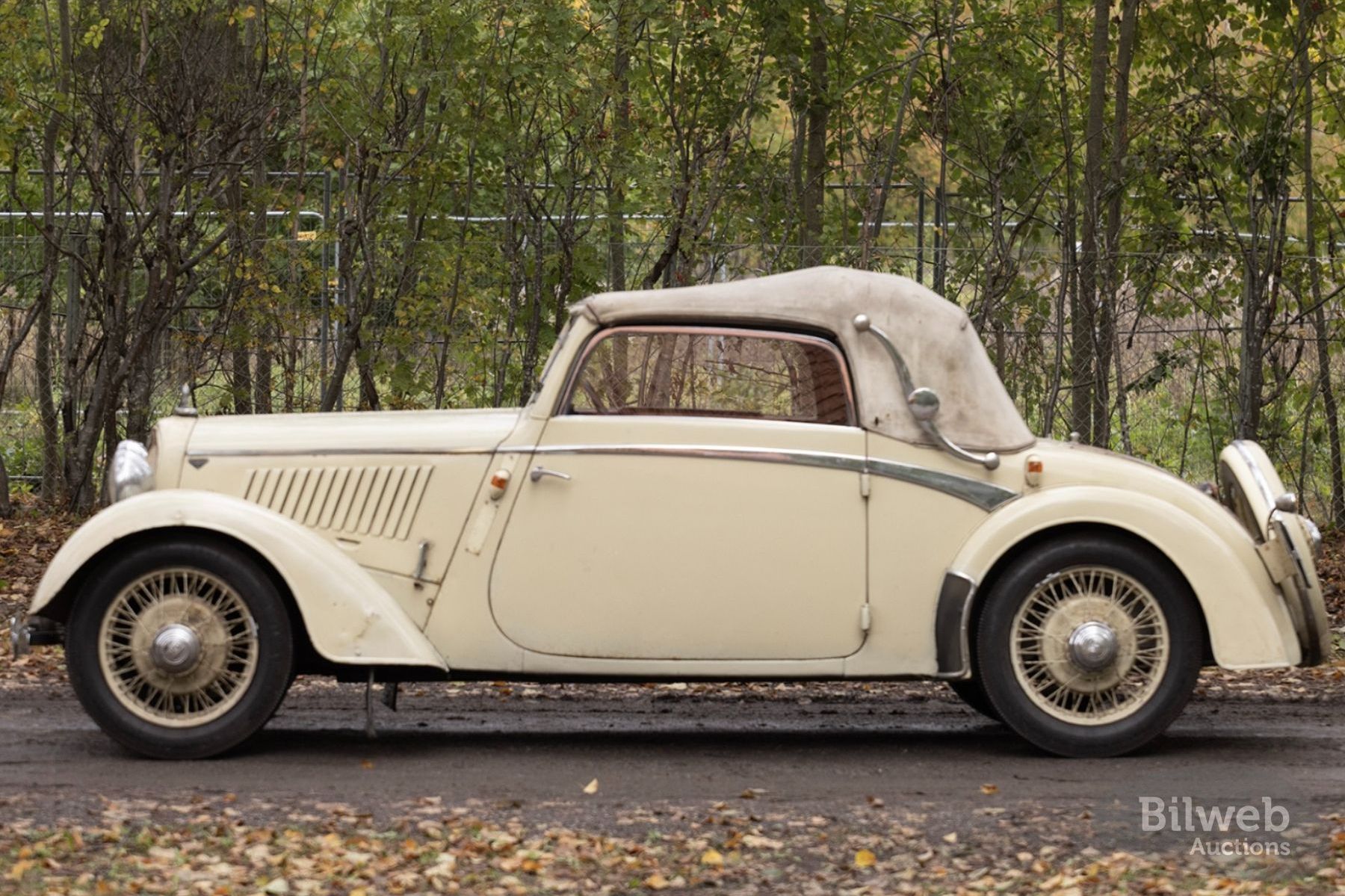
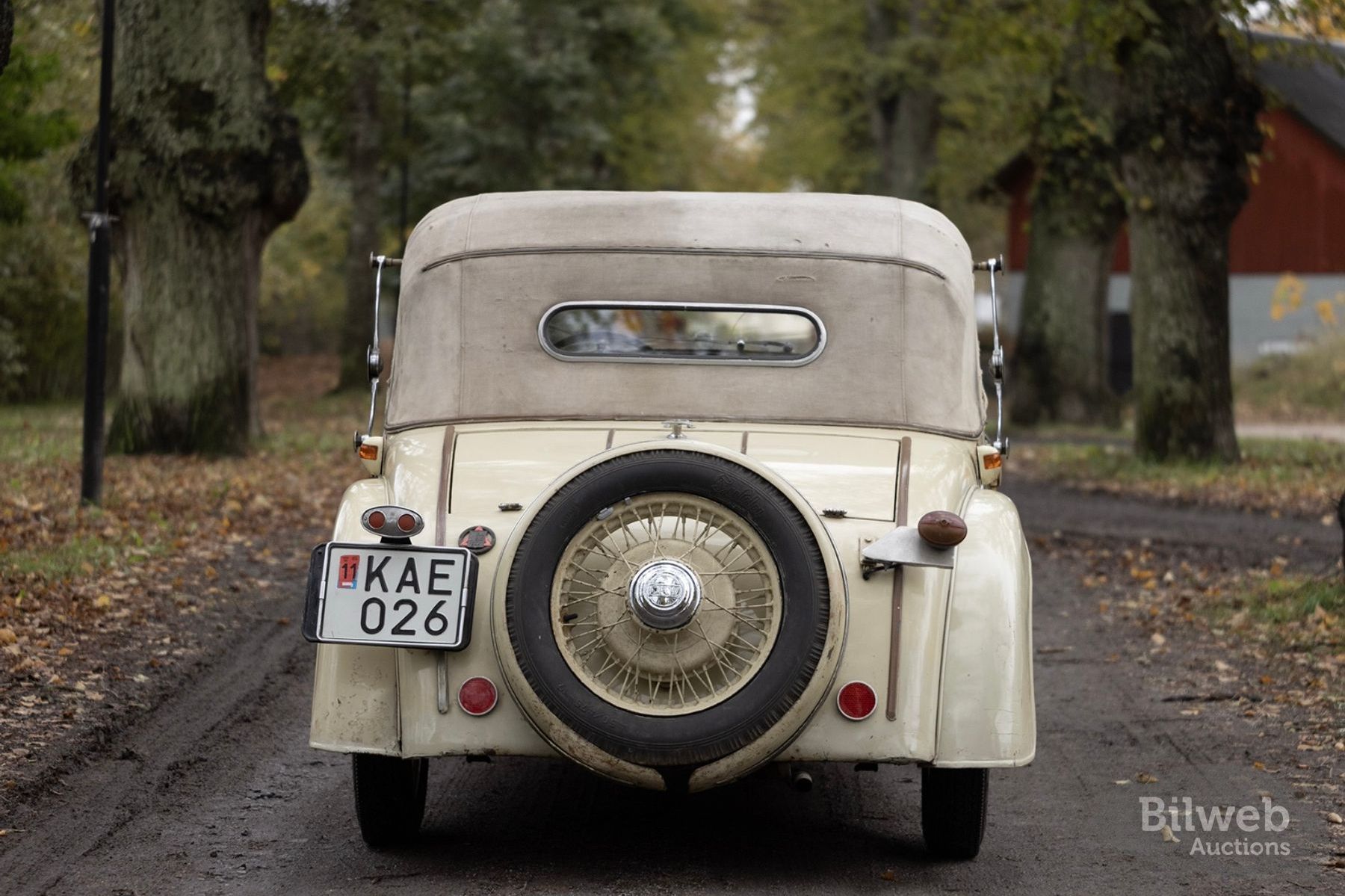
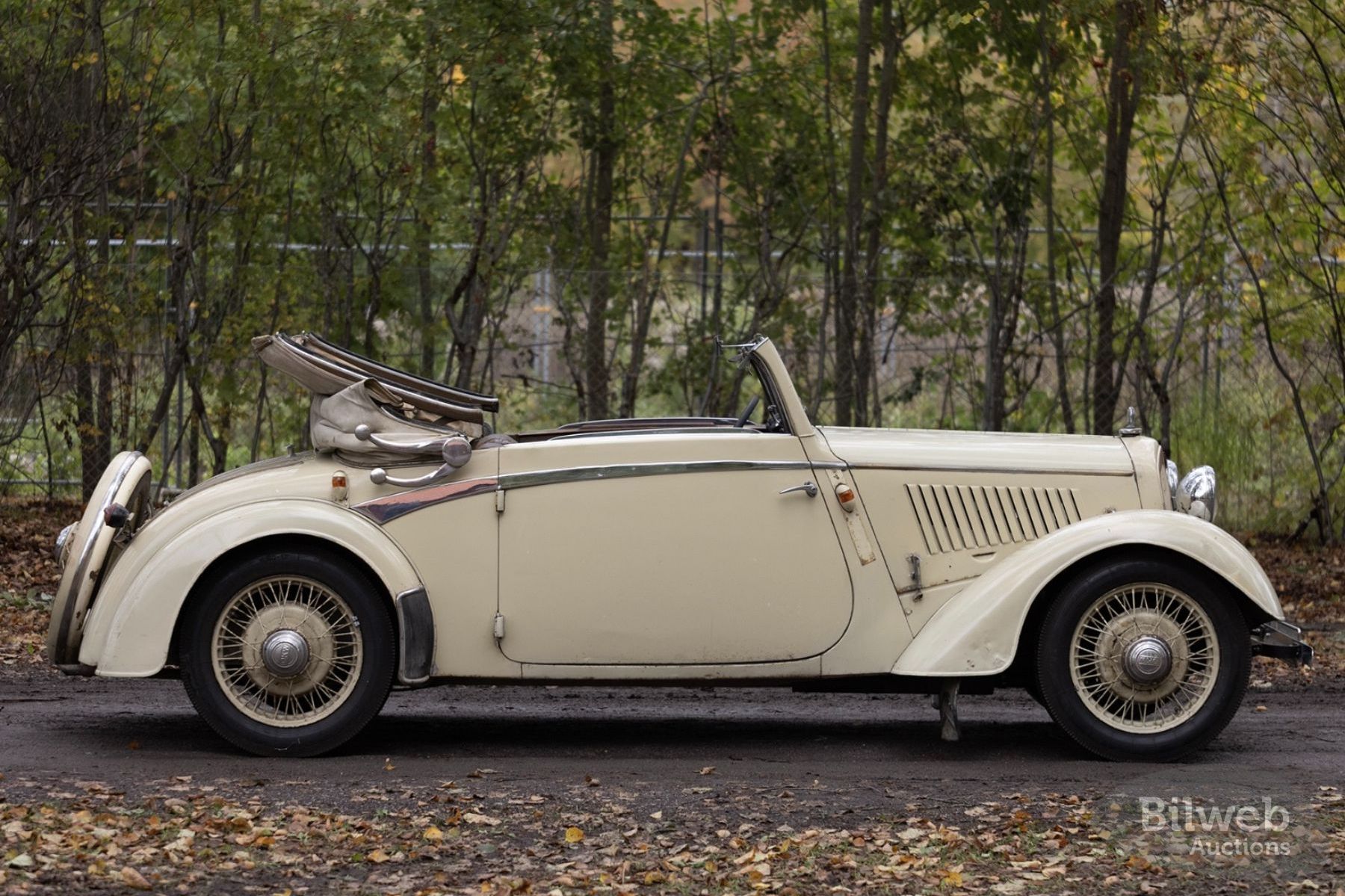
The paint has been on the car for some time, though it is uncertain how long. It may possibly be partly original, except for the fenders, which should be black but have been repainted. Trim, emblems, glass, etc. in wonderfully patinated original condition. The semaphore indicators have been replaced with turn signal lights, probably in the mid-1950s. Good wire wheels with good tires, age unknown. Engine bay in fine condition.
The soft top may also be original and is patinated, but it serves its purpose and is easy to raise/lower. -
General condition
Soon it will be time for Antikrundan, and just as with a folk-art cabinet from Dalarna, Knut Knutsson would surely be delighted by the wonderful patinated, original, well-used condition. This is a charming piece of motoring history, one that truly makes you wish to cruise along lovely summer roads just as Elsa did in the late 1930s.
MOT (tech. insp.)
Ursprungsbesiktning: 1978-07-17 (regbes)
Datum i trafik första gången: 1978-07-17
Senast godkända besiktning: -
Besiktningsbefriad: Ja
Skattebefriad: Ja
Körförbud: Nej
Antal ägare: 2
Facts about the model
In 1922 he began manufacturing motorcycles, and the business grew to become the largest in the world, a position DKW held all the way up to World War II.
In the late 1920s he also built electric-powered cabs and delivery vehicles, and this gradually brought the business ever closer to conventional automobile production.
This began in 1928 with the so-called Typ P, which had a 15-horsepower two-stroke engine of 584 cc and rear-wheel drive. The Typ P was followed by a few more rear-wheel-drive types, but in the fall of 1930 a front-wheel-drive model was designed, fittingly named the Front. It was a small car fitted with the motorcycle department's 500 cc engine, which however was water-cooled in the car. Production of the Front began in 1931 and was followed the next year by the first Meisterklasse.
The DKW cars eventually became a commercial success, but since the world economy in general, and the German economy in particular, was in turmoil in the early 1930s, Rasmussen struggled with considerable problems. The solution came in 1932 with the formation of the conglomerate Auto Union AG. It comprised DKW, the Audi factory (which was owned by Rasmussen), the luxury car manufacturer Horch, which was in great financial difficulty, and the cars from Wanderer-Werke. Hence the four rings in the emblems of the AU cars.
In total, approximately 215,000 front-wheel-drive DKW cars were built up to 1940. Of these, a relatively large number were convertibles; two- or four-seaters and so-called cabriocoach bodies. DKW cars were exported to numerous countries, and in Sweden they were very popular, quickly making the Top Ten list of best-selling car makes among mostly American brands; in 1939 they ranked third in Sweden after Opel and Chevrolet.
After a decent recovery in the 1950s, the two-stroke engine quickly became outdated. After various turns in which AU was acquired by Daimler-Benz and subsequently sold on to Volkswagen, only the DKW brand remained. In 1966 it was discontinued and AUDI took over the fallen mantle — and the rest is an entirely different story.
Location and viewing Information
For viewing the vehicle, contact the inspector/case manager:
Tore Thallaug
+46 705 90 23 65
tore@bilwebauctions.se
Pick up
NOTE! Payment (deposit to our account) must be made within 5 days and before collection.
Auction information
General information about the condition of the vehicles .
- At this auction, many vehicles have been included in car collections and have been stored (mothballed) for a long time. For this reason, they are described from a collector's perspective and may need technical reviews and maintenance service - oil, battery replacement, new tires, brake review, etc. - before they can be used. .
- During the auction days information about a vehicle may be updated up to the day before the auction ends. When you bid at the end of the auction period - and also if you have made an earlier bid - we therefore ask you to read the descriptions carefully, in case something has been changed due to new information.
Important to know before placing your bids!
- Once you have called in an item and the reservation price is reached we want you to deposit the entire purchase amount into our client funds account before retrieval can take place.
- When you need to retrieve a called in object we want you to examine it carefully. If you consider that the item does not match our description you do not need to complete the purchase. In this case the deposited purchase sum and the entry fee are refunded.
- If you do not examine the item on the spot the call charge will be debited, but you do not have to complete the deal.
- If you make the entire purchase exclusively at a distance you have 14 days to cancel, but must return the item at your own expense.
- Your shipping costs and other costs are not reimbursed when the right of withdrawal is exercised. Swedish court applies.
- For items that have not been collected within 14 days storage costs may be charged.