


 Facebook
 Twitter


Beschreibung
The current owner bought the car in the summer of 2025. By then, the bodywork had already been restored, including welding repairs and a respray. It is unclear when the work was done, but the paintwork is of a good standard. Some of the welding repairs are a little amateurish, though they are in areas that are generally out of sight.
The current owner, who worked for Saab for many years, has carried out a fair amount of work on the car. The engine has been gone through, the cylinder head skimmed, all gaskets replaced and the carburettors cleaned and tuned. The gearbox has been fully rebuilt and a new, heavier-duty freewheel unit fitted. The starter motor, generator and steering wheel have been refurbished, and a new, heavier-duty generator shaft has been fitted. The coolant hoses, brake hoses, clutch friction plate, clutch release bearing, exhaust pipe and outer CV joint boots have all been replaced. A battery charger with a quick-connect fitting is included.
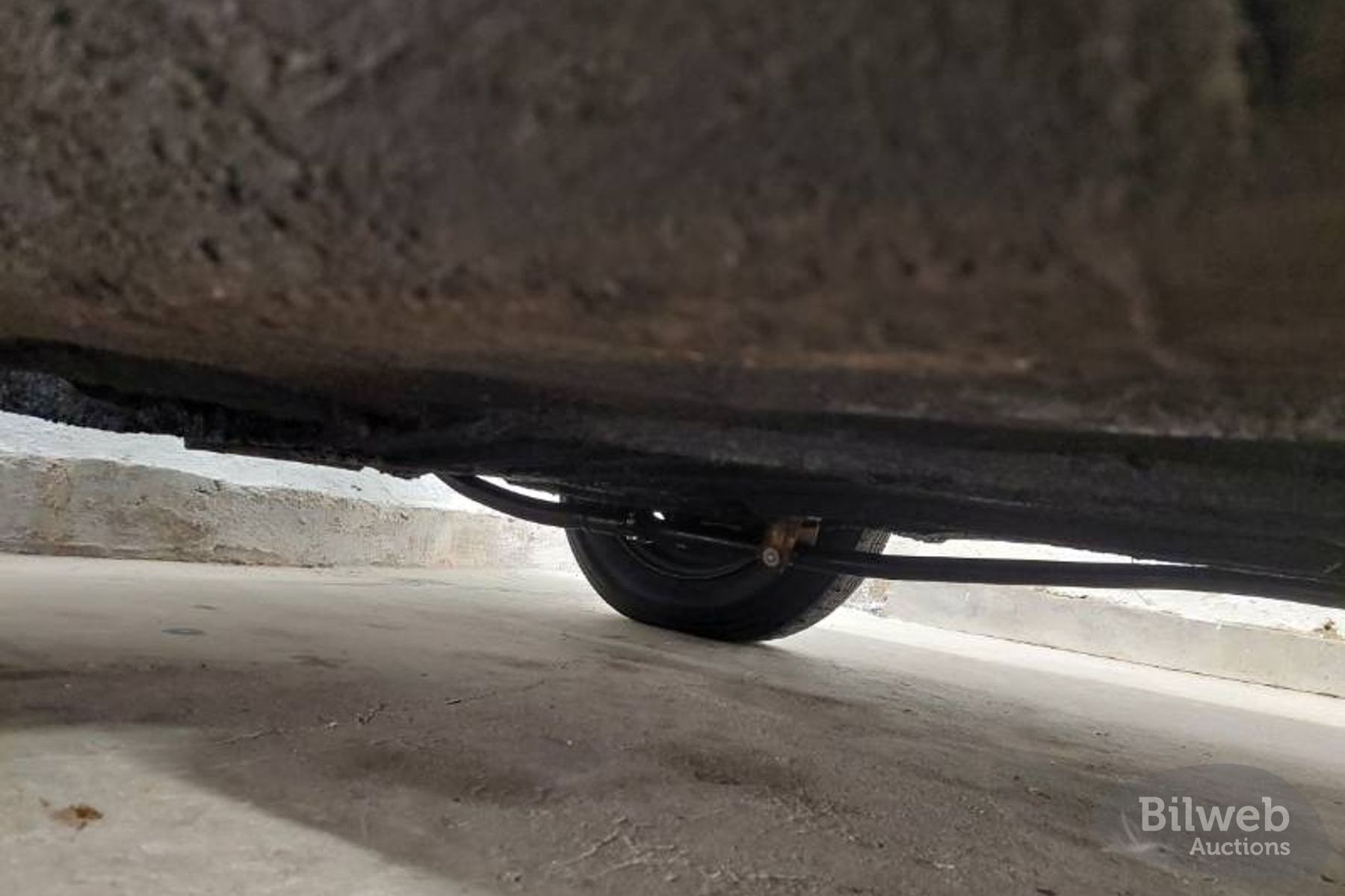
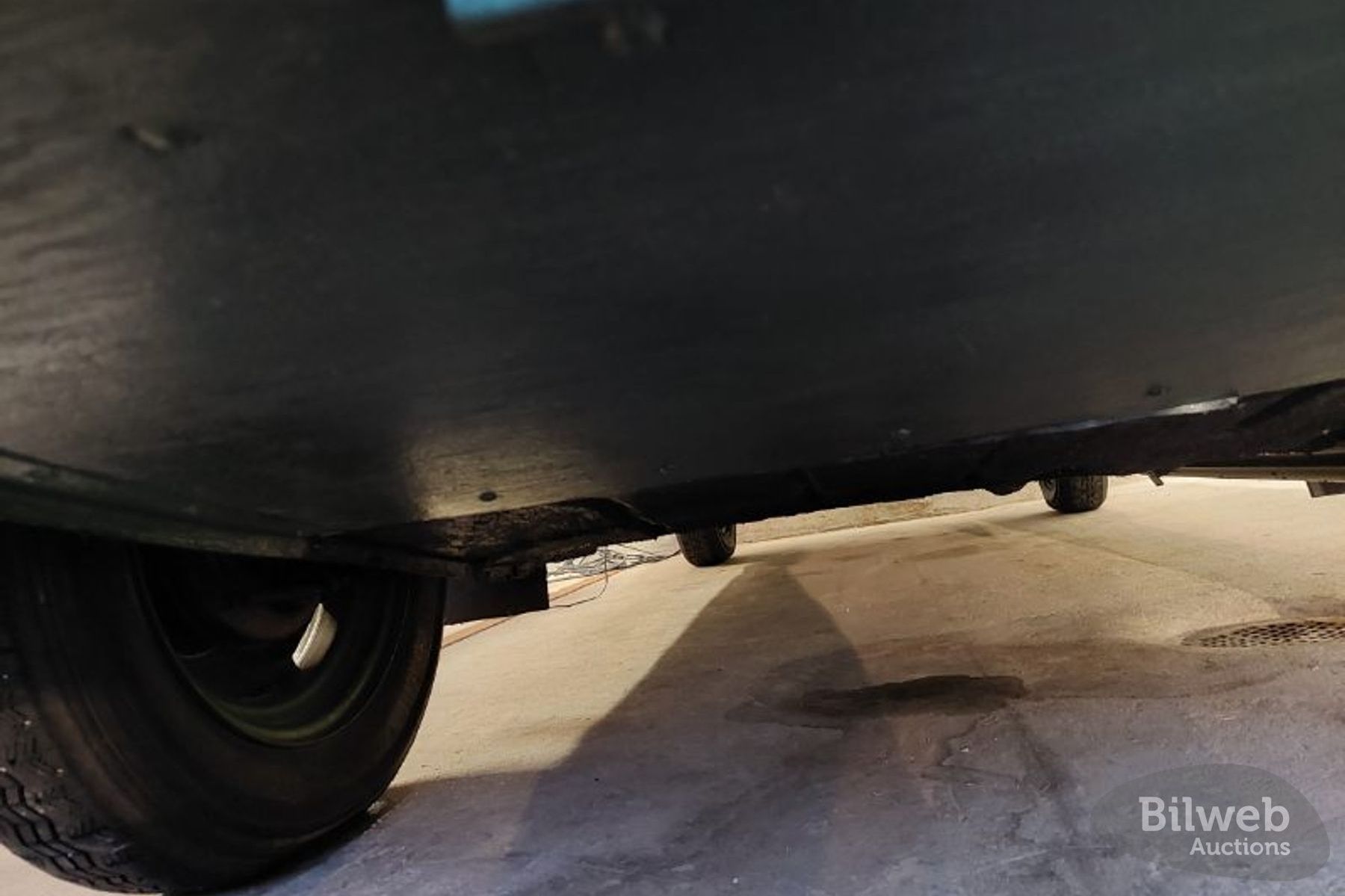
The car looks very good underneath as well. We had no lift available at the time of the inspection, so we were unable to inspect the underside. There are several photos, though the image quality is poor. We did not road-test the car because of snow and icy conditions at the time of the inspection.
 Kostenlose Historie (9)
Teknische Daten
Beurteilung Fahrzeugzustand
-
Zustand technisch
The car feels to be in very good technical condition. All functions are in place and, according to the owner, the car drives as it should on the road. This without rattles or other unwanted noises.
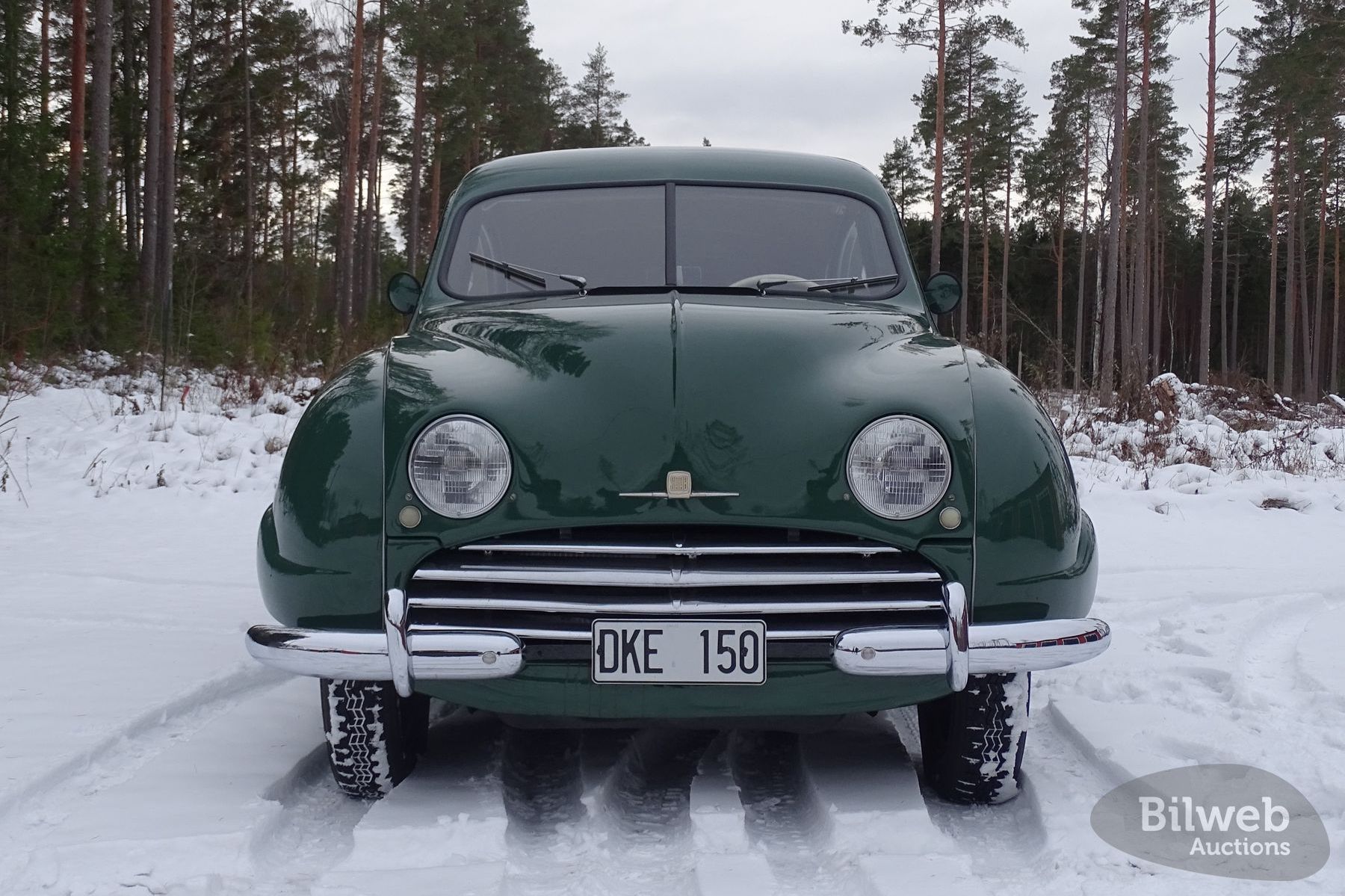
New headlights fitted, new front brake drums and a new master cylinder. Rebuilt steering box, new coolant hoses, adjusted torsion bar suspension. A new 6V electric fan has been fitted, which improves drivability in the summer. New period-correct Michelin tires are mounted on the original wheels. The original jack in a jute sack and a spare wheel are included. -
Zustand Interieur
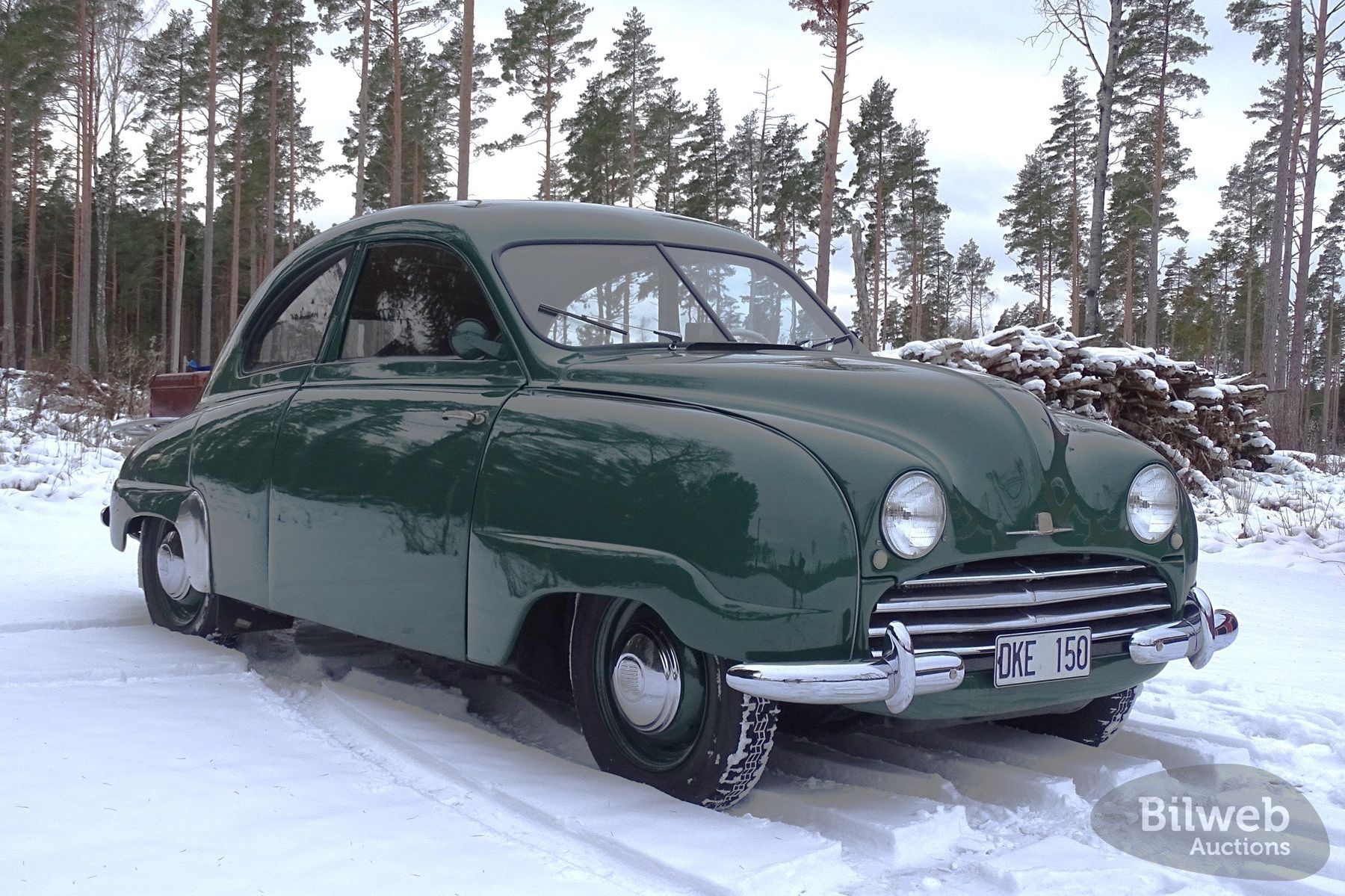
Stunning interior. The seat floor rails have been replaced, otherwise the upholstery is in original condition. Headliner is intact but has darkened over time – a very common phenomenon on these Saabs. For the perfectionist, one might consider removing the dashboard and repainting it. It is currently in driver-quality condition and slightly detracts from the overall impression of the interior.
-
Zustand Exterieur
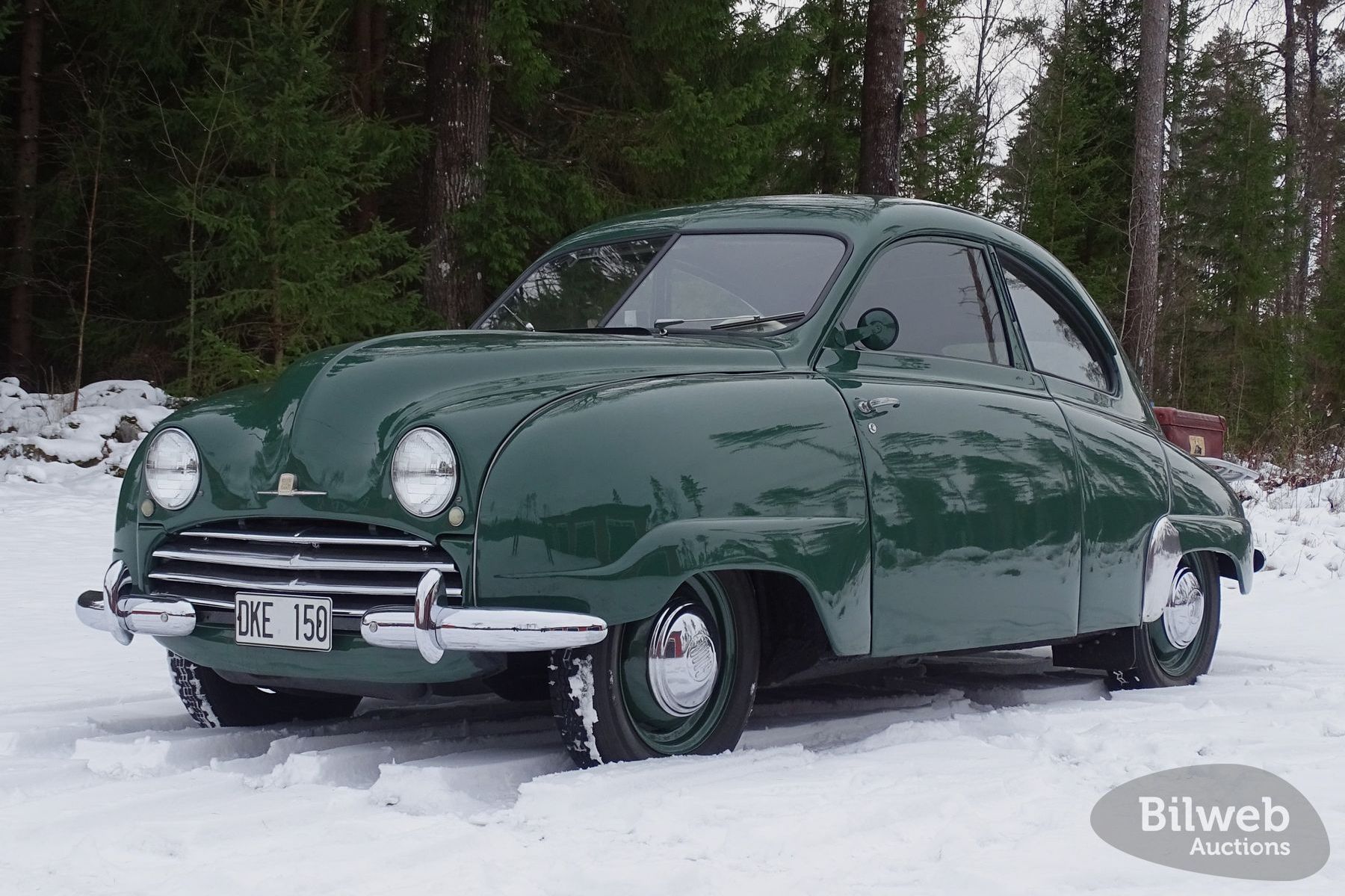
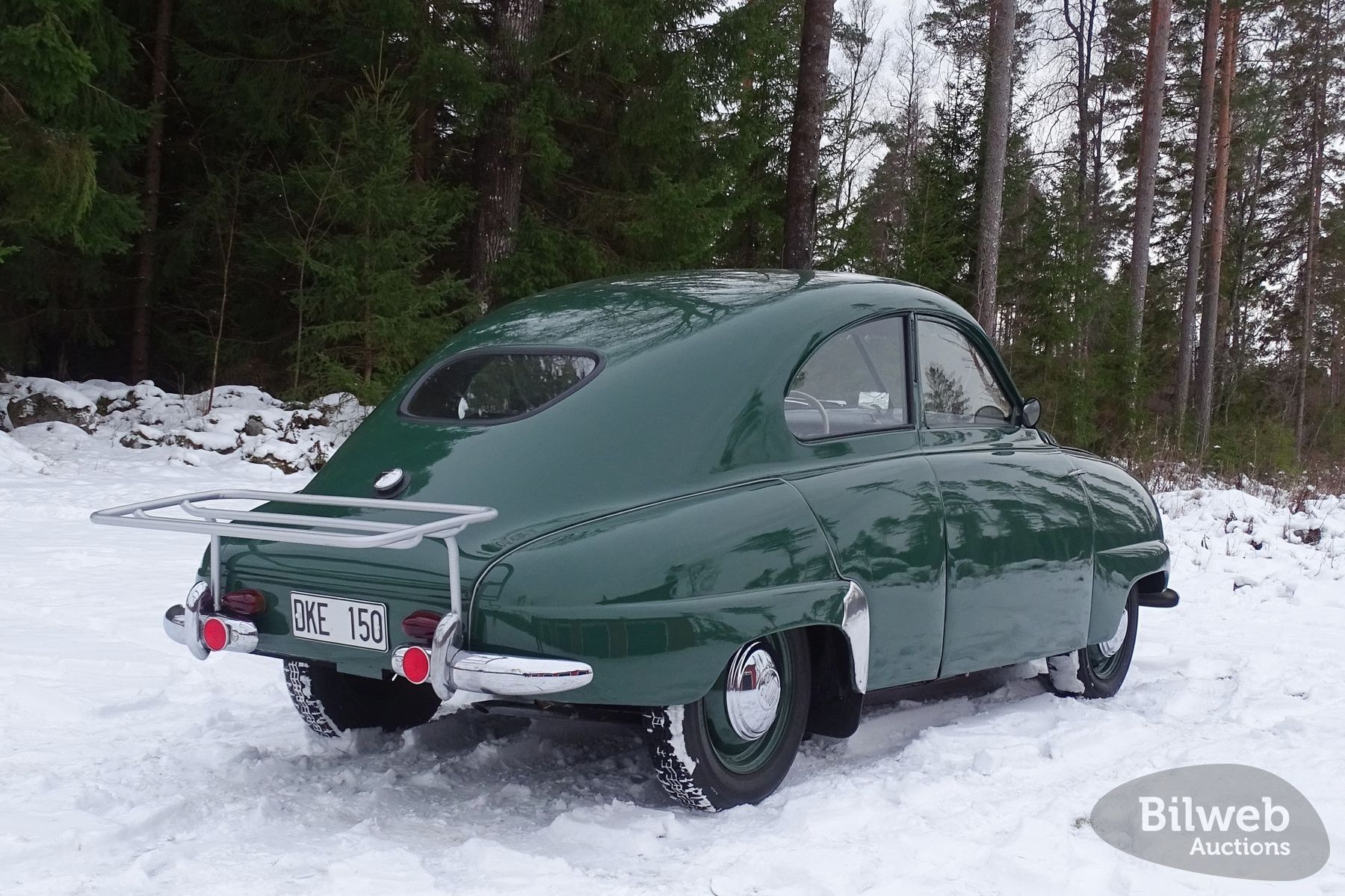
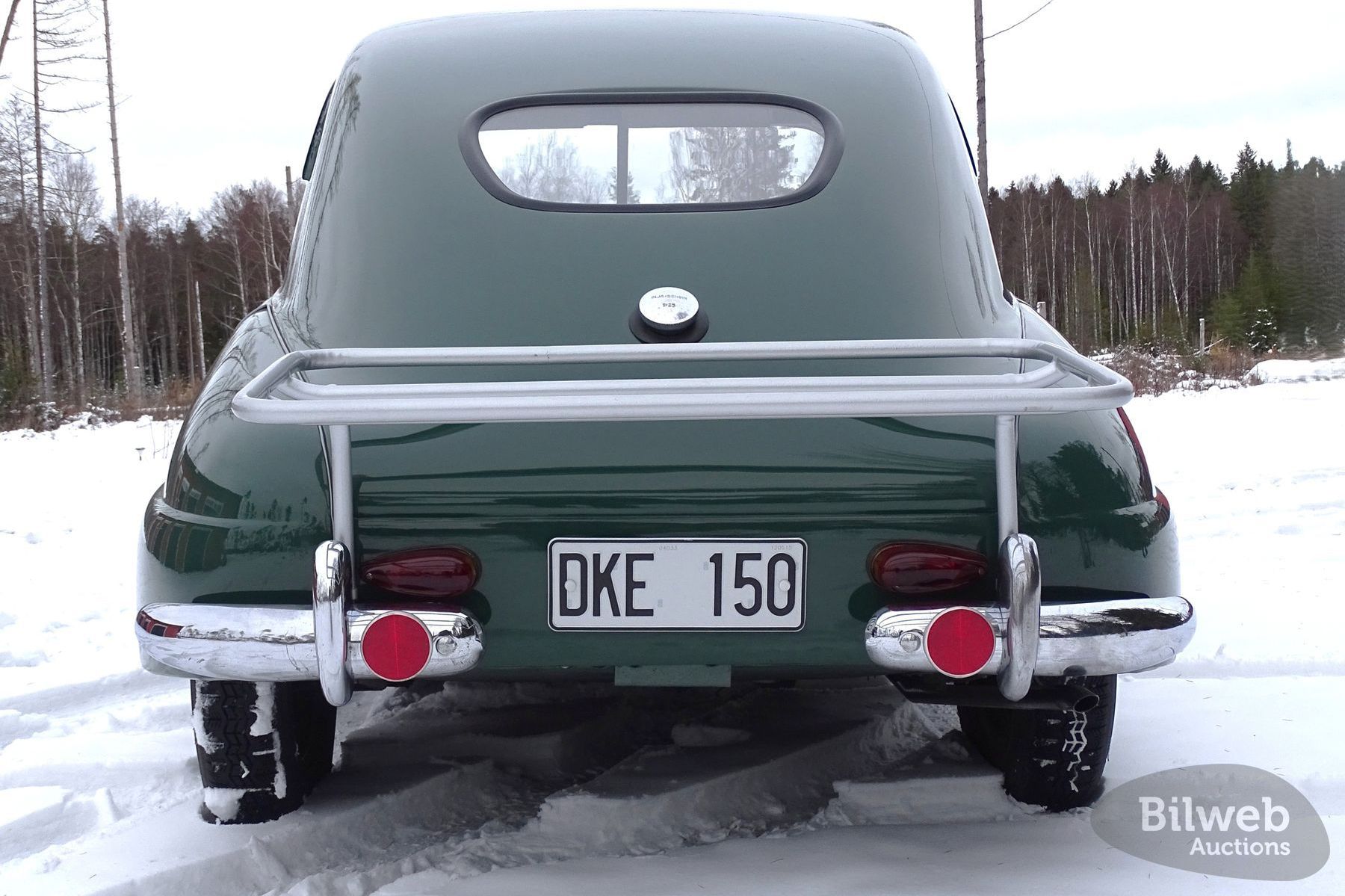
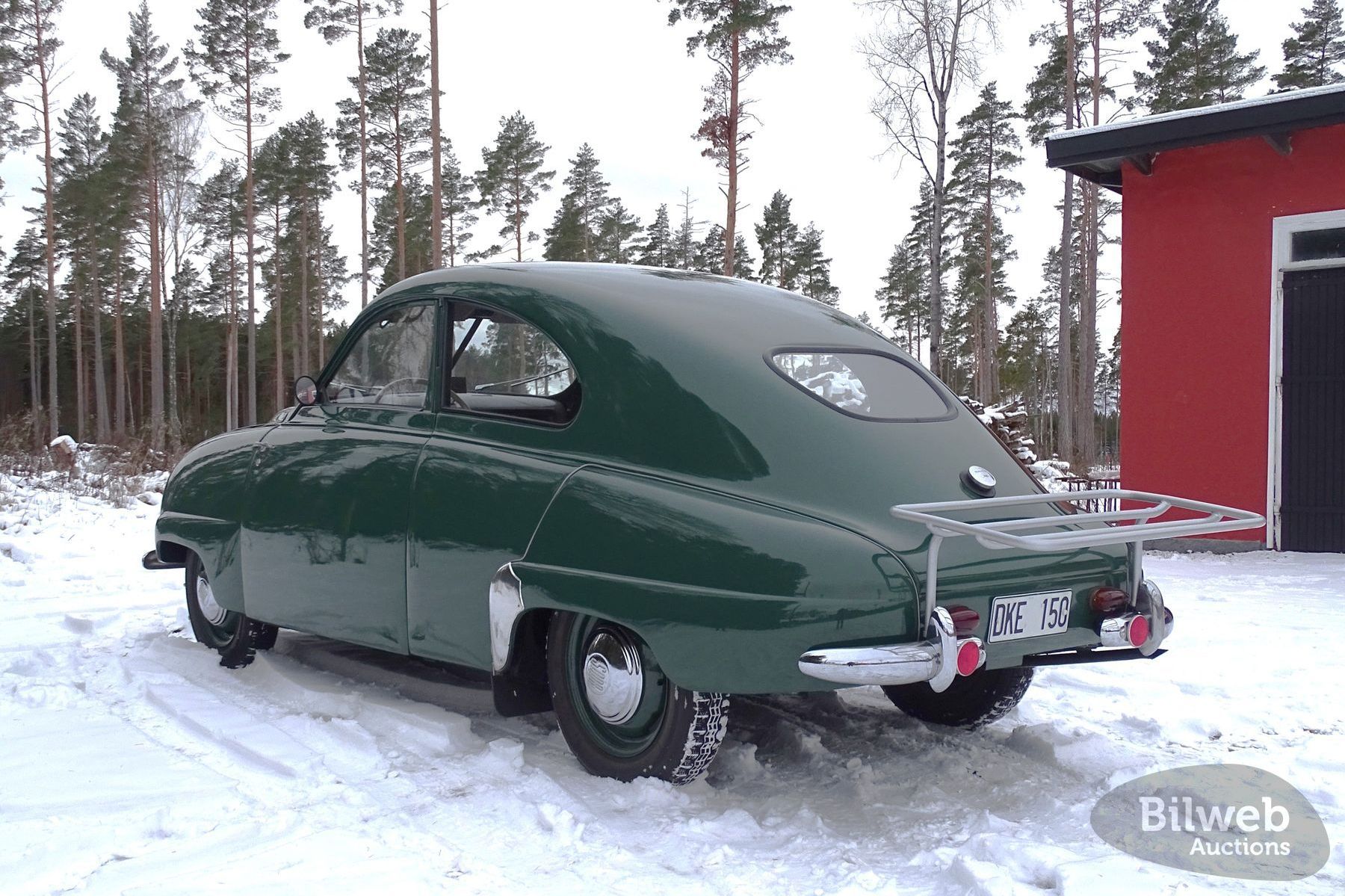
Very fine paintwork. This car has held up very well, even though it was certainly painted 30-40 years ago. No rust and no door edge chips that we have been able to detect. New headlights, fine glass and bumpers. New straps (door stops) fitted. A nice accessory in the form of a luggage rack comes with the car. Easy to fit and remove, as needed.
-
Zustand gesamt
A stunningly fine car and a model that always attracts attention with its distinctive body and characteristic two-stroke sound. Enjoy the Swedish summer in this classic, or why not cruise along the French Riviera and stand out from the crowd.
Fahrzeugangeben vom Kraftfahrzeugbundesamt
Ursprungsbesiktning: 2012-05-15 (regbes)
Datum i trafik första gången: 2012-06-12 (520410)
Senast godkända besiktning: 2018-11-02
Besiktningsbefriad: Ja
Skattebefriad: Ja
Körförbud: Nej
Antal ägare: 2
Fakten zum Modell
A total of 20,132 examples of the Saab 92 were built between 1949 and 1956. For the 1951 model year specifically, the chassis numbers ranged from 701–1,469 (a total of 769 cars). Model year 1952 covered chassis numbers 1470-5300 (a total of 3830 cars)
The need for new legs to stand on.
At the end of World War II in 1944–1945, Svenska Aeroplan Aktiebolaget (Saab) realized that orders for military aircraft would decline sharply, and decided to begin manufacturing passenger cars.
Project 92.
A small group of about 15 engineers, led by wing designer Gunnar Ljungström, was given the assignment. The name came from the fact that the company's previous aircraft projects were designated 90 (Scandia) and 91 (Safir).
Prototypes and relocation. The first drivable prototype (the Ur-Saab, 92.001) was completed in 1946 in Linköping, and in June 1947 the 92.002 was shown to the press. In the fall of 1947, the entire automobile division was moved to the factory in Trollhättan, where the Saab 21 propeller-driven fighter was being phased out.
After a pre-series of 20 test cars, official series production began in Trollhättan on December 12, 1949.
Production during 1950 and 1951
A slow, craftsman-like pace. The first cars were delivered in January 1950. Production required a great deal of manual labor, and in the beginning only four cars a day rolled out of the factory. During the 1950 calendar year, a total of 1,246 cars were produced.
News for the 1951 model year. The cars classified as model year 1951 (chassis numbers 701–1,469) were essentially identical to the 1950 model. The biggest change in production was that the American gauges from Stewart-Warner were replaced with German instruments from VDO.
A single color and specification. Although the sales brochures listed a simpler Standard model, in practice all cars built and delivered during 1950 and 1951 came in the more upscale De Luxe specification – and all were painted in the same dark green (bottle green) shade.
Further development after 1951
Saab 92B (1953–1956). In the fall of 1952 (for the 1953 model year), the heavily updated Saab 92B was launched. It received an external trunk lid (which meant the battery could be moved from the engine compartment to the trunk), a larger rear window, and more color choices beyond green
Lagerort und Info zur Besichtigung
For viewing the vehicle, contact the inspector/case manager:
Peter Forslund
+46 705 34 79 00
peter.forslund@bilwebauctions.se
Abholung
NOTE! Payment (deposit to our account) must be made within 5 days and before collection.
Auktionsinfo
General information about the condition of the vehicles .
- At this auction, many vehicles have been included in car collections and have been stored (mothballed) for a long time. For this reason, they are described from a collector's perspective and may need technical reviews and maintenance service - oil, battery replacement, new tires, brake review, etc. - before they can be used. .
- During the auction days information about a vehicle may be updated up to the day before the auction ends. When you bid at the end of the auction period - and also if you have made an earlier bid - we therefore ask you to read the descriptions carefully, in case something has been changed due to new information.
Important to know before placing your bids!
- Once you have called in an item and the reservation price is reached we want you to deposit the entire purchase amount into our client funds account before retrieval can take place.
- When you need to retrieve a called in object we want you to examine it carefully. If you consider that the item does not match our description you do not need to complete the purchase. In this case the deposited purchase sum and the entry fee are refunded.
- If you do not examine the item on the spot the call charge will be debited, but you do not have to complete the deal.
- If you make the entire purchase exclusively at a distance you have 14 days to cancel, but must return the item at your own expense.
- Your shipping costs and other costs are not reimbursed when the right of withdrawal is exercised. Swedish court applies.
- For items that have not been collected within 14 days storage costs may be charged.